Sister Bunny, Easter Quote: A Designer’s Practical Review
As an embroidery designer who has spent countless hours digitizing and testing files for real-world production, I approach every new machine embroidery design with a mix of curiosity and skepticism. We have all been there: you download a cute graphic, load it onto your machine, and hope for the best, only to find puckered fabric or broken threads. That is why evaluating Sister Bunny, Easter Quote required more than just a glance at the thumbnail. I needed to understand how this design behaves when the needle actually hits the fabric.
This piece falls under the category of Print Templates and Graphics, which immediately signals that it is likely a vector-based asset intended for versatility. The product description notes that it comes as one SVG file, compatible with Cricut Explore and Silhouette Designer Edition, along with a DXF file. For those of us in the embroidery world, this requires a specific workflow. Since these are primarily cutting files, using them for embroidery often involves auto-digitizing or manual conversion unless a specific embroidery format is provided separately. This distinction is crucial for anyone planning to use this in a commercial setting.
First Impressions and Visual Mood
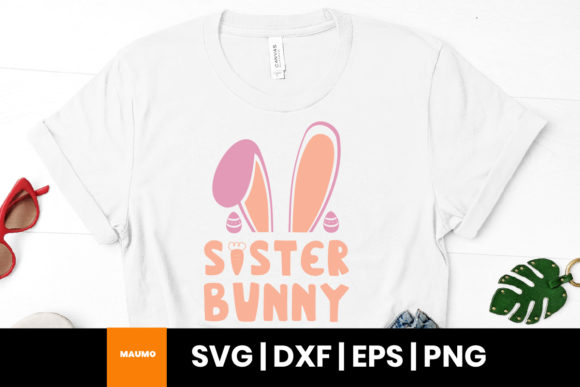
The first thing that strikes me about Sister Bunny, Easter Quote is its playful yet sentimental tone. The theme is unmistakably seasonal, tapping into the warm, familial vibes of spring holidays. The layout appears balanced, combining illustrative elements with typography. In embroidery, text is always the trickiest part. If the lettering is too thin, it disappears; if it is too dense, it creates a stiff patch on soft fabric.
Visually, the design feels approachable. It does not try to be overly complex, which is a good sign for home hobbyists and small business owners alike. The "Sister" aspect suggests a strong giftability factor. When I look at this design, I immediately think of personalized gifts. It is not just a generic bunny; it is a statement of relationship. This emotional connection is what drives sales for Etsy sellers and craft fair vendors. The mood is light, cheerful, and nostalgic, making it a natural fit for items meant to evoke comfort and joy.
Real-World Application: From Digital File to Finished Product
To truly test the viability of Sister Bunny, Easter Quote, I imagined several real-life scenarios where this design would shine. Let’s consider a custom embroidered tote bag. Tote bags are usually made of canvas or heavy cotton, which provides a stable base for stitching. Here, the design’s lines would need to be bold enough to stand out against the textured weave. If the original SVG has very fine details, they might get lost in the fabric texture. In this case, adjusting the stitch density or simplifying the input before digitizing would be essential.
Another strong candidate for this design is sweatshirt embroidery. Hoodies and crewnecks are staples of spring wardrobes. However, fleece and jersey knits are stretchy and prone to distortion. If I were applying this as a custom apparel item, I would be cautious about the size. A large, dense design on a thin sweatshirt can cause the garment to pucker around the edges. Using a cut-away stabilizer would be non-negotiable here to maintain the integrity of the finished product. The design’s charm lies in its simplicity, so keeping the stitch count moderate would ensure the garment remains comfortable to wear.
For baby embroidery, such as on a onesie or a burp cloth, the stakes are higher. Babies have sensitive skin, and parents wash these items frequently. If Sister Bunny, Easter Quote is used here, the backing must be soft, and the stitch density should be low to prevent irritation. A satin stitch border might look nice, but a running stitch or light fill stitch would be more practical for durability and comfort. This is where understanding the difference between a graphic for printing and a design for stitching becomes critical.
Navigating Technical Challenges
While the aesthetic appeal is clear, there are technical hurdles to consider. Since the product includes SVG and DXF files, it is technically a vector graphic. To turn this into a high-quality embroidery file, one must digitize it properly. Auto-digitizing software often struggles with text, creating jagged edges or excessive jump stitches. I recommend manually adjusting the node points and ensuring that the direction of the satin stitches follows the curve of the letters and the bunny’s shape.
Small hoop sizes present another challenge. If you are working with a 4x4 inch hoop, you may need to scale down the design. However, scaling down reduces the width of the stitches. If the text becomes too narrow, the thread may break, or the letters may become illegible. Always test the design on scrap fabric first. Check the thread color contrast carefully. Pastel threads on white fabric might look pretty in a mockup but vanish in real life. Conversely, dark threads on dark fabric can look muddy. Testing in black and white mockups helps verify that the contrast holds up regardless of color choice.
Curved surfaces, like caps or hats, require special attention. The design must be centered perfectly, and the stabilizer must be hooped tightly. If the Sister Bunny, Easter Quote design has wide elements, it might not fit well on a standard cap without distorting the front panel. In such cases, consider splitting the design or choosing a different product, like a flat-brimmed hat or a beanie, where the surface area is more forgiving.
Commercial Viability and Brand Consistency
For Etsy sellers and small shop owners, consistency is key. If your brand focuses on rustic, handmade aesthetics, this design fits well. If your brand is ultra-modern and minimalist, you might need to adjust the styling. The value of this design lies in its versatility. It can be used for holiday embroidery projects, nursery decor, or even as part of a larger collection of family-themed gifts.
When selling finished products, customer trust is built on quality. A poorly stitched design reflects badly on your brand. Ensure that the stitch density is appropriate for the fabric texture. For example, an applique design approach could be used here, where the bunny shape is cut from fabric and stitched down, reducing bulk and adding a professional touch. This technique works wonders for towels and blankets, where heavy stitching can make the item stiff.
Before listing any items for sale, confirm the licensing terms. The product description mentions it is for various projects, but always double-check if commercial use is permitted for the final stitched item. Most digital assets allow for physical sales but restrict the resale of the digital file itself. Clarifying this protects your craft business from legal issues.
Final Verdict and Practical Tips
In conclusion, Sister Bunny, Easter Quote is a charming asset with strong potential for spring-themed collections. Its strength lies in its emotional resonance and visual clarity. However, success depends on proper execution. Here are my top tips for using this design:
- Test on Scrap Fabric: Always run a test stitch-out to check for alignment and tension issues.
- Choose the Right Stabilizer: Use cut-away for knits and tear-away for wovens to prevent puckering.
- Adjust Stitch Density: Reduce density for delicate fabrics to avoid stiffness.
- Check Legibility: Ensure text remains readable at smaller sizes, especially for baby items.
- Verify Licensing: Confirm commercial rights before selling finished goods.
Whether you are creating a personalized gift for a sister, stocking your Etsy shop with holiday embroidery items, or designing custom apparel for a boutique, this design offers a solid foundation. With careful attention to detail and proper digitizing techniques, Sister Bunny, Easter Quote can elevate your embroidery projects from simple crafts to professional-grade merchandise. Remember, the best designs are those that not only look good on screen but survive the rigors of the needle and thread with grace.